
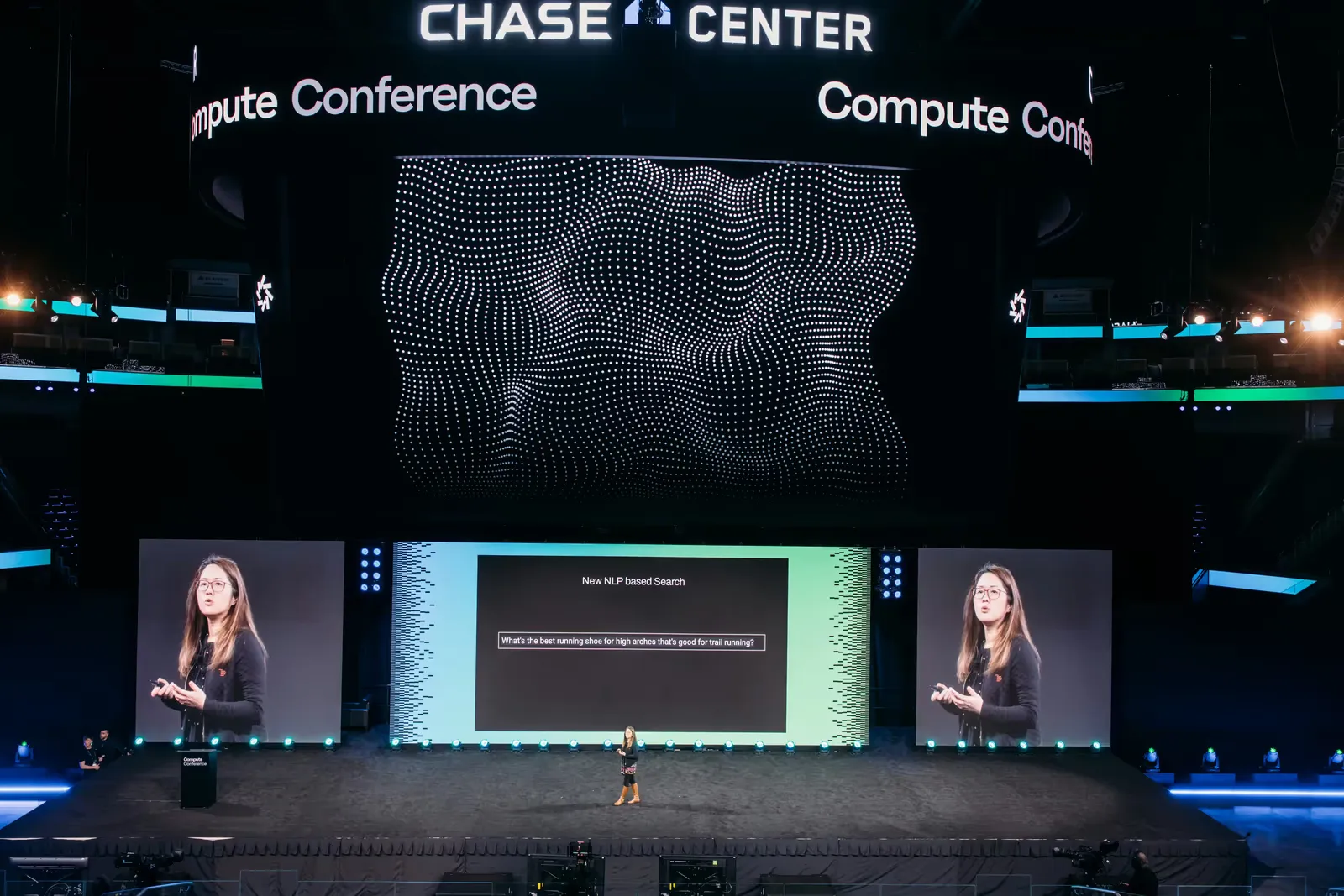
Daytona, the startup building “computers for AI agents,” held its inaugural Compute conference on March 8–9 at the Chase Center in San Francisco — the home arena of the Golden State Warriors. The application-based event, with tickets at $250, gathered more than 1,100 attendees for a day of talks on the new infrastructure layer being built for AI, agents, and the next generation of cloud.
It was a bold venue choice for a company that had closed its $24 million Series A only a month earlier. The round, announced in February under the tagline “to give every agent a computer,” was led by FirstMark Capital, with participation from Pace Capital, Upfront Ventures, and strategic investors including Datadog and Figma Ventures, bringing the company’s total funding to around $31 million. Founded by Croatian entrepreneurs Ivan Burazin, Vedran Jukić, and Goran Draganić, Daytona provides sandboxed, programmable compute environments that spin up in milliseconds and can be paused, forked, and snapshotted — infrastructure now used by customers ranging from YC startups to Fortune 100 companies, including LangChain and Writer.
Who spoke at Compute?
After an opening keynote by Daytona co-founder and CEO Ivan Burazin, the single main conference day featured more than 20 speakers, among them:
- Aaron Levie (Box) — co-founder and CEO
- Harrison Chase (LangChain) — co-founder and CEO
- Parag Agrawal (Parallel) — founder and former Twitter CEO
- Lin Qiao (Fireworks AI) — co-founder and CEO
- Nikita Shamgunov (Neon) — co-founder
- Dylan Patel (SemiAnalysis) — founder, with a talk on the 2026 datacenter: CPUs, RL environments, and agent-driven workloads
- David Cramer (Sentry) — co-founder
- Abhinav Asthana (Postman) — founder and CEO
- Russ d’Sa (LiveKit) — co-founder and CEO
- Matt Turck (FirstMark) and Mark Suster (Upfront Ventures) — investors
What was discussed
The agenda covered enterprise agent infrastructure, database architecture for AI workloads, the limits of cloud infrastructure designed for humans, sandbox environments, and datacenter design for autonomous systems. The recurring argument across the stage: existing cloud primitives were built for human developers, and agentic workloads — which spin up thousands of short-lived, stateful environments in parallel — need a different foundation.
For a Series A company, staging a Chase Center conference doubled as a statement of ambition. FirstMark’s Matt Turck, who joined Daytona’s board with the funding round, admiringly called the scale of the event ridiculous — and with over 150 community events run across four continents in the past year, Compute is now the centerpiece of the company’s in-person strategy.